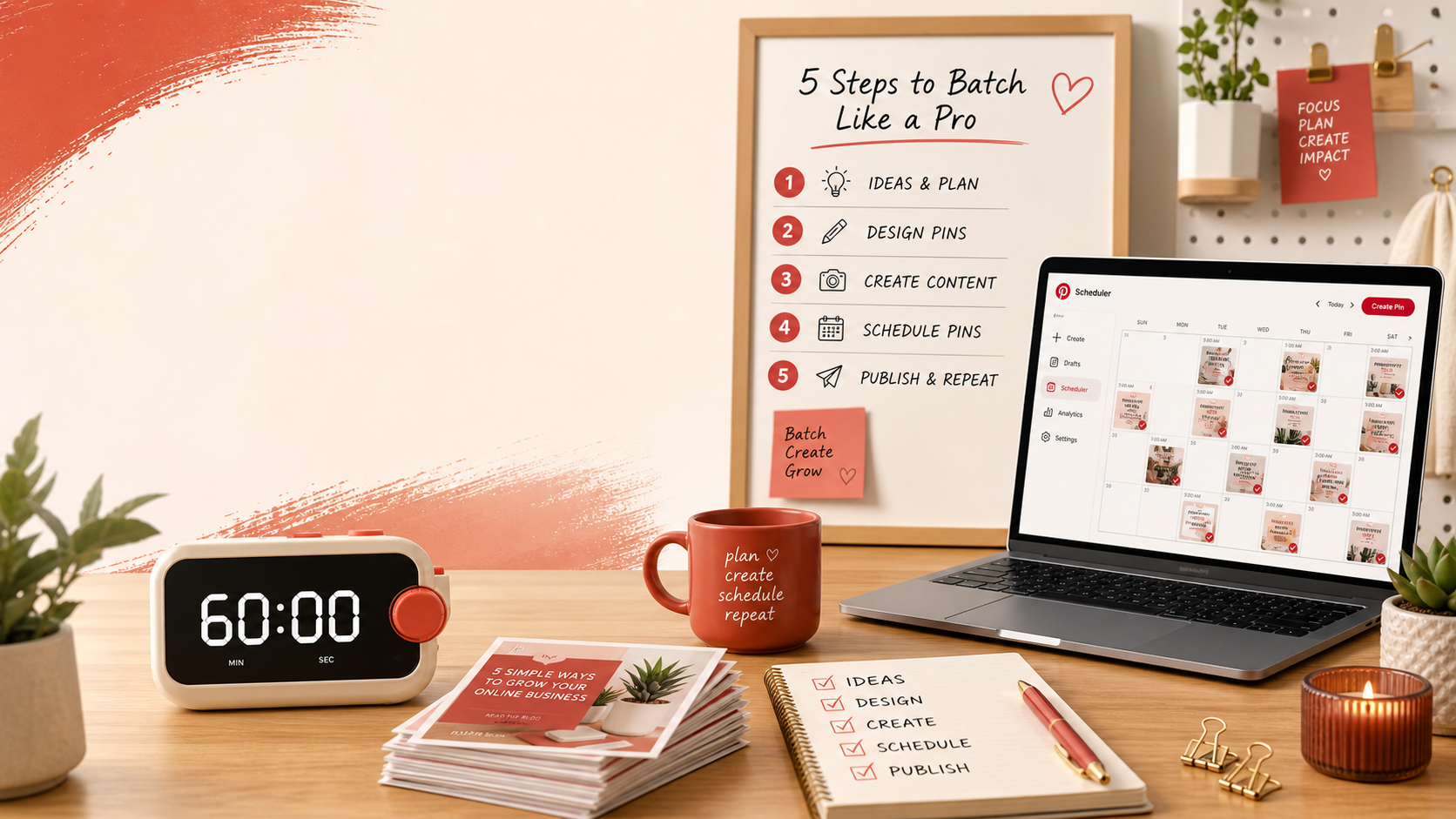
The teams that win on Pinterest rarely improvise their calendar one week at a time. They decide early which collections matter, what search moments they want to own, and how far in advance creative should be scheduled. Seasonal planning is less about being organized for its own sake and more about showing up before demand peaks.
Why seasonal planning matters on Pinterest
Pinterest behaves differently from short-lifespan social feeds. Users search ahead. They save ideas early. They build intent over time. If your team starts publishing fall content when fall demand is already obvious, you are usually late. Seasonal planning gives your content enough runway to collect saves, distribution, and outbound clicks before the buying window tightens.
Start with a demand calendar, not a content calendar
Most teams begin by asking what they want to post. Start one step earlier: ask what your customer will be planning next month, next quarter, and next season. Build a simple demand sheet with four columns:
- Seasonal moment or campaign
- Products or categories to push
- Core keyword themes
- First publish date
This keeps Pinterest tied to revenue events instead of random inspiration bursts.
Use the 6-4-2 scheduling model
A reliable operating model is to plan six weeks ahead, build four weeks ahead, and schedule two weeks ahead.
- Six weeks ahead: define campaign angles, product priorities, and board targets.
- Four weeks ahead: collect assets, create fresh pin visuals, and prepare title and description variants.
- Two weeks ahead: upload, QA, and schedule the actual publishing queue.
This cadence is simple enough for a small team and structured enough for agencies or multi-brand operators.
Plan by cluster, not by individual pin
Do not manage seasonal campaigns one pin at a time. Group pins into clusters:
- One product family or collection
- One audience intent
- One board group
For example, a sewing pattern store might create separate clusters for vacation dresses, linen sets, bridal guest looks, and back-to-school basics. Each cluster gets its own creative variations and board mapping. This makes weekly execution faster and reporting easier.
Build creative variations before you need them
When a campaign starts moving, your team should already have at least two to three visual directions ready. Seasonal winners often come from small creative shifts: a different crop, a stronger headline hierarchy, a cleaner product shot, or a clearer use case. Waiting until the campaign is live to test creative wastes the early traffic window.
What to review every Monday
Seasonal planning still needs weekly control. A short Monday review is enough:
- What is scheduled in the next 14 days?
- Which product clusters are underrepresented?
- Which published pins are already outperforming the rest?
- Do any dates need to shift because inventory, pricing, or campaign priorities changed?
This prevents seasonal plans from becoming static documents nobody revisits.
Where PinFlow fits
PinFlow is most useful once your calendar stops being simple. Instead of juggling board selection, profile switching, and manual tracking across spreadsheets, you can schedule by account, monitor failed publishes, and keep upcoming campaigns visible in one dashboard. Seasonal planning only creates leverage if publishing operations stay clean.
Three mistakes that create seasonal bottlenecks
- Publishing too late. Pinterest rewards early intent capture, not last-minute reaction.
- Using one creative for every board. Seasonal campaigns need variants, not clones.
- Planning content without inventory context. Push what you can actually fulfill.
Simple KPI set for seasonal campaigns
Keep the scorecard small. Measure:
- Published pins per campaign cluster
- Save rate by visual direction
- Outbound clicks by product family
- Top boards by traffic contribution
That is enough to decide what should be expanded, refreshed, or dropped next cycle.
Final takeaway
Seasonal Pinterest growth is operational. The teams that look creative from the outside usually just have stronger planning discipline behind the scenes. If you map demand early, build content in clusters, and schedule before the market gets crowded, Pinterest becomes much easier to scale.